Brindisi
Things to do in Brindisi, from the Roman column to the sailor's monument
Quick answer
Brindisi's old town can be seen on foot in one relaxed day. Start at the Roman column that marks the end of the Via Appia, walk the waterfront, visit Piazza Duomo with the Templars' portico and the archaeology museum, see the round church of San Giovanni al Sepolcro, then take the small boat across the harbour to the Monumento al Marinaio at sunset.
| Time needed | 1 full day on foot, 2 days at a slow pace |
|---|---|
| Old town size | Most sights within a 15-minute walk of each other |
| Best start | The Roman column and Virgil's steps |
| Don't miss | The boat across the inner harbour at sunset |
| Airport to old town | About 10 minutes by car |
| Best walking hours | Before 11:00 and after 17:00 in summer |
Is Brindisi worth visiting?
In the early evening the harbour goes quiet. Fishermen fold their nets, a boy jumps from the quay below the Roman column, and the whole town starts walking along the water as if someone had rung a bell. That walk, the passeggiata, is the first thing I would tell anyone to do in Brindisi.
Brindisi is not a place you come to for two weeks. It is a port city with two thousand years of history packed into a small old town, and it is the place that makes the rest of Puglia easy: the airport is about 10 minutes away, Ostuni about half an hour, Lecce about 40 minutes. Most people pass through. The ones who stop for a night or two find a real Apulian town, with fewer crowds than Lecce or Polignano and prices to match.
This guide covers what to see, in the order a local would walk it, plus the practical details: how long you need, when churches open, and how to fit Brindisi into a wider trip.
Where does the Via Appia end? The Roman column and Virgil's steps
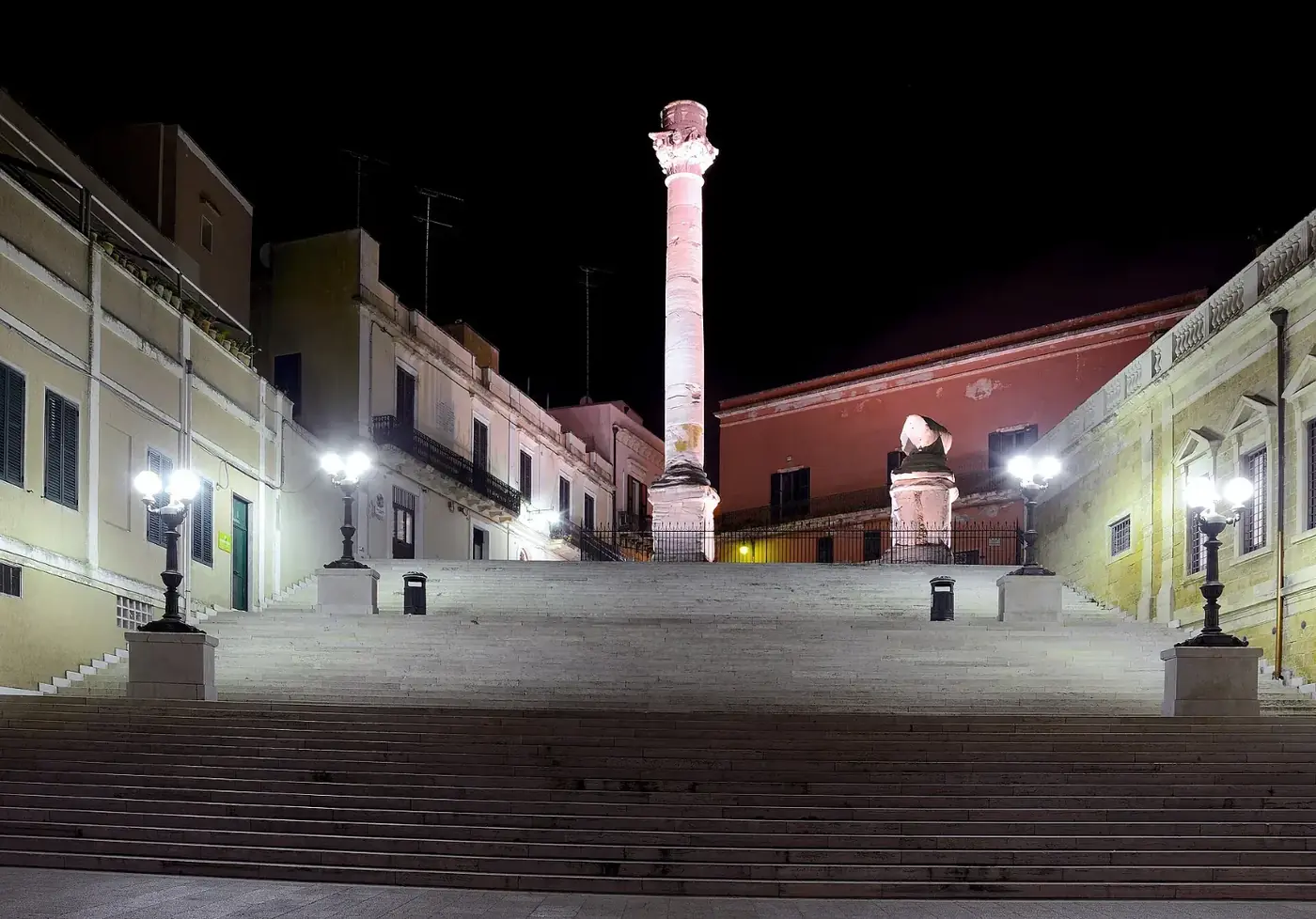
The Roman column (Colonne Romane) stands at the top of a wide flight of steps above the harbour. Tradition says it marked the end of the Via Appia, the great road from Rome, and the point where travellers took ship for Greece and the East. Two columns once stood here. One is still in place; most of the second was given to Lecce in the 17th century, where it now carries the statue of Sant'Oronzo in the main square.
The steps are called the Scalinata Virgilio. The Roman poet Virgil died in Brindisi in 19 BC on his way back from Greece, and a plaque on a house near the top of the steps marks the spot tradition gives for his death. The original marble capital of the column, decorated with gods and tritons, is kept indoors at Palazzo Granafei-Nervegna, a few minutes' walk away on Via Duomo. It is worth the detour: you see the carving at eye level, which is impossible on the column itself.
Come here twice if you can: in the morning, when the light is flat and the steps are empty, and at night, when the column is lit and the harbour reflects it.
The waterfront: Lungomare Regina Margherita
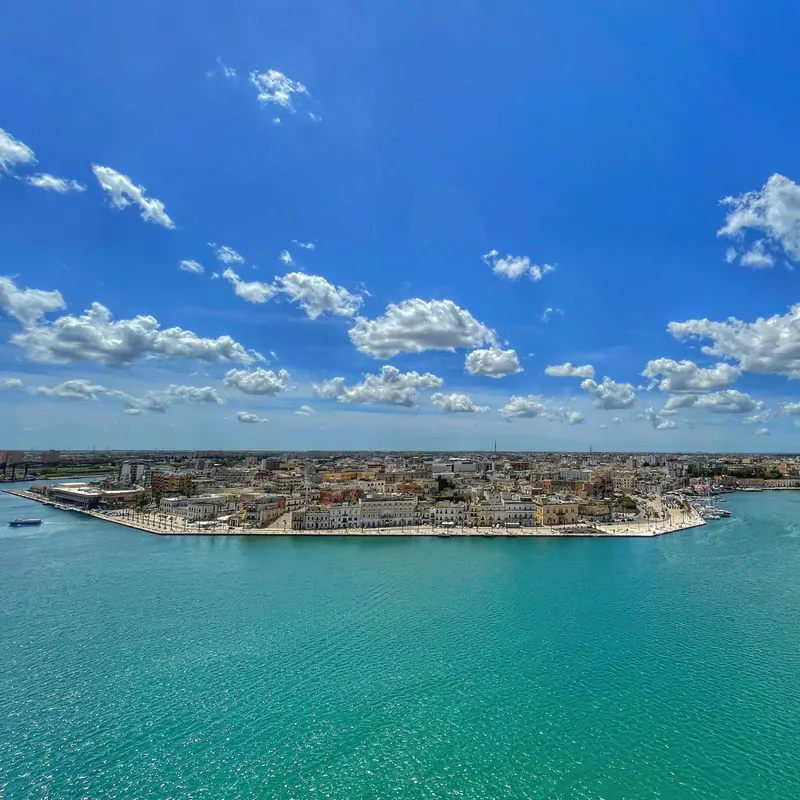
From the column, walk along Lungomare Regina Margherita, the promenade that follows the inner harbour. On one side you have cafés and old palazzi; on the other, the water, the fishing boats and, across the harbour, the tall brick rudder of the Monumento al Marinaio d'Italia.
This is where the city spends its evenings. Families push prams, older men argue on benches, teenagers gather near the water. In summer the promenade fills after 19:00 and stays busy until late. Sit with a granita or an aperitivo and watch: it is the best free show in town.
If you walk the whole length, you also pass the point where the cruise ships and the ferries come into view. Brindisi has been a port since before the Romans, and the harbour is still its reason for being.
How do you get to the Monumento al Marinaio?
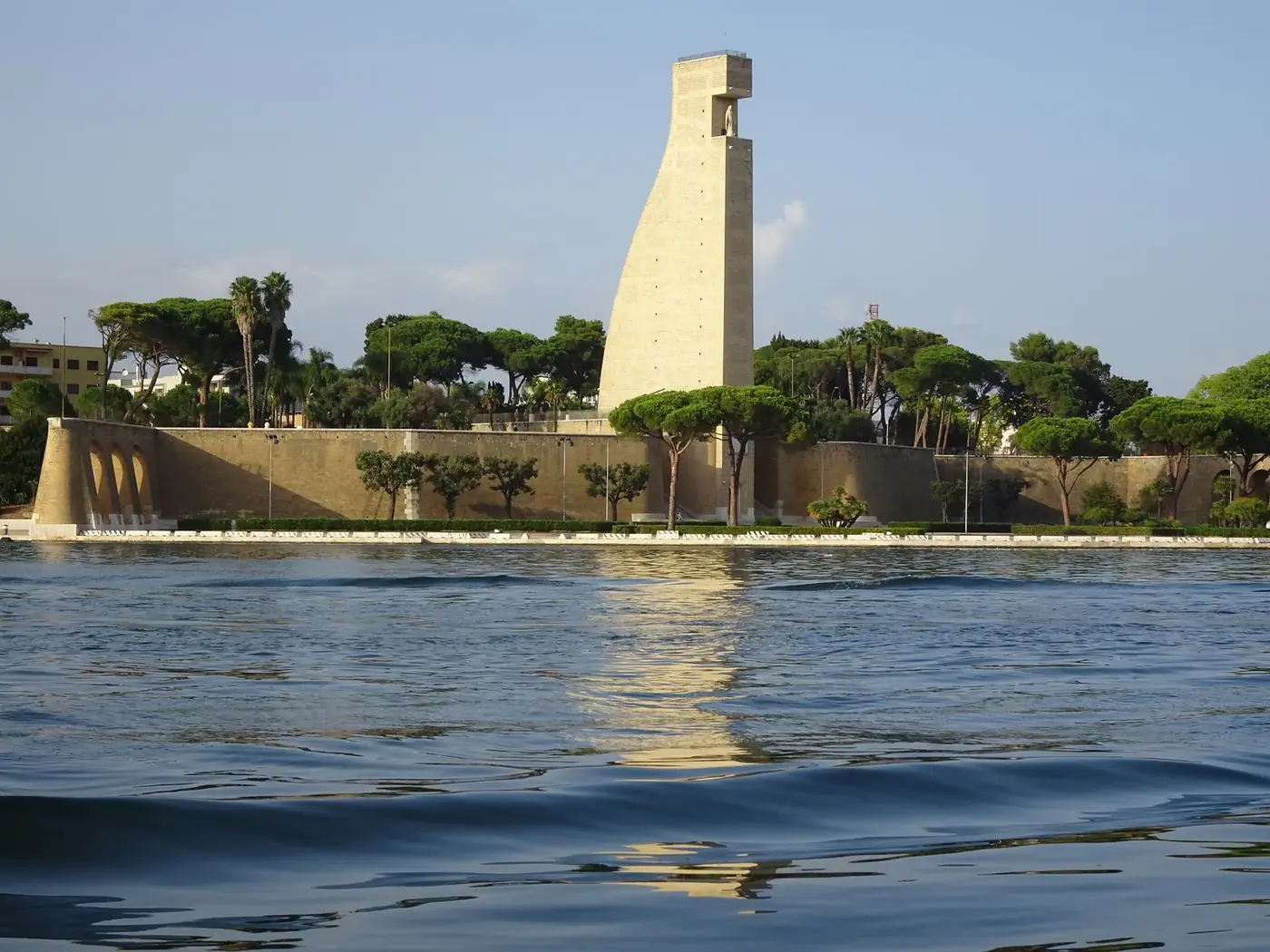
Small passenger boats cross the inner harbour from the waterfront to the Monumento al Marinaio d'Italia, a 1930s monument shaped like a ship's rudder and dedicated to Italian sailors who died at sea. The crossing takes only a few minutes. The boats run more often in summer and less in winter, so check the times posted on the quay on the day.
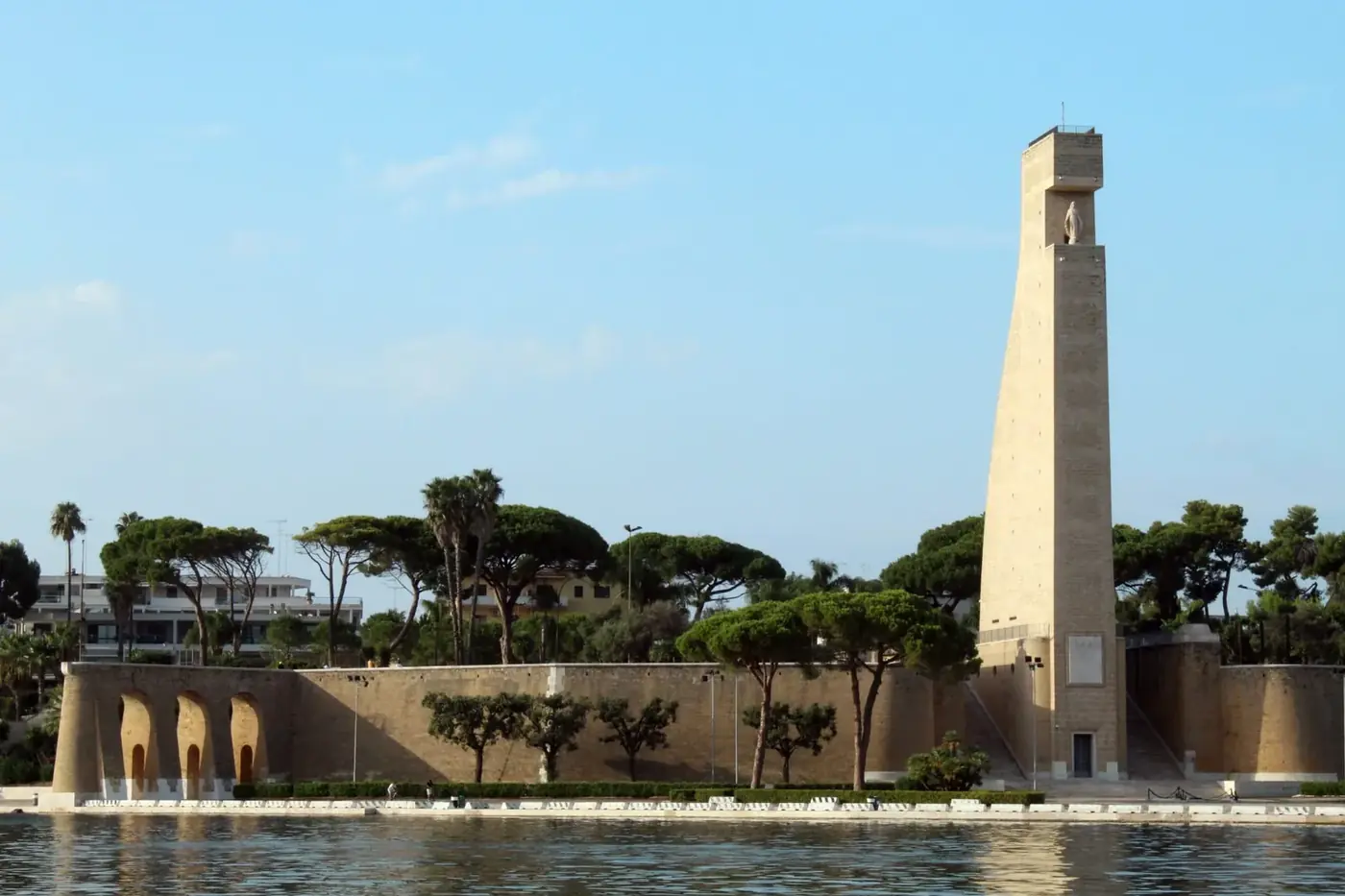
The monument itself has a crypt with the names of the fallen and, when open, a lift to a viewing terrace at the top. Opening times change with the season, so treat the climb as a bonus rather than the reason to go. The real reward is the view back across the water: the whole old town in one frame, the Roman column, the cathedral's bell tower, the palm trees of the promenade. At sunset this is the best postcard of Brindisi.
You can also reach the monument by car or taxi along the road around the harbour, but it is a long detour and you lose the best part, which is being on the water.
Piazza Duomo, the Templars' portico and the archaeology museum
A short climb from the column brings you to Piazza Duomo, the heart of the medieval town. The cathedral was rebuilt in the 18th century after an earthquake, but parts of the older church survive, including fragments of the medieval mosaic floor.
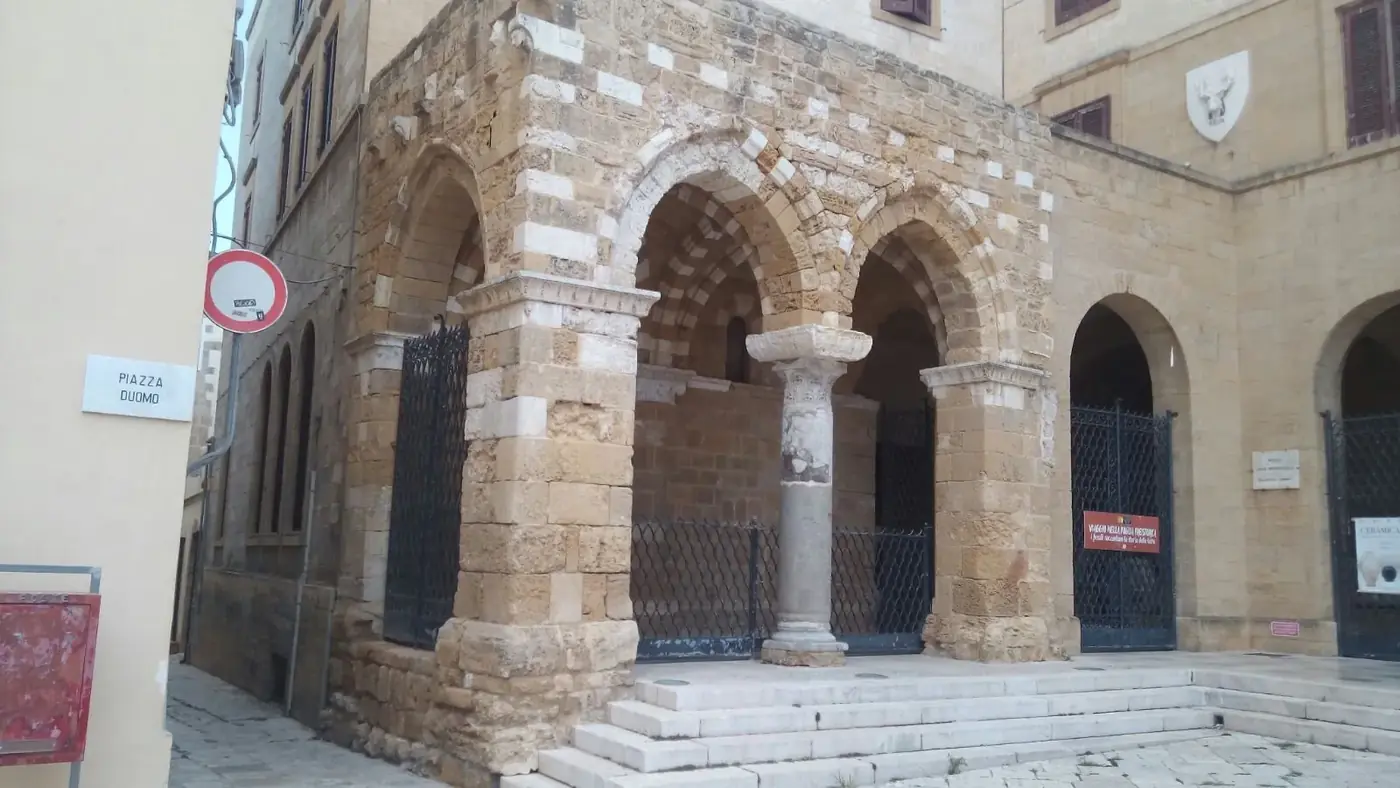
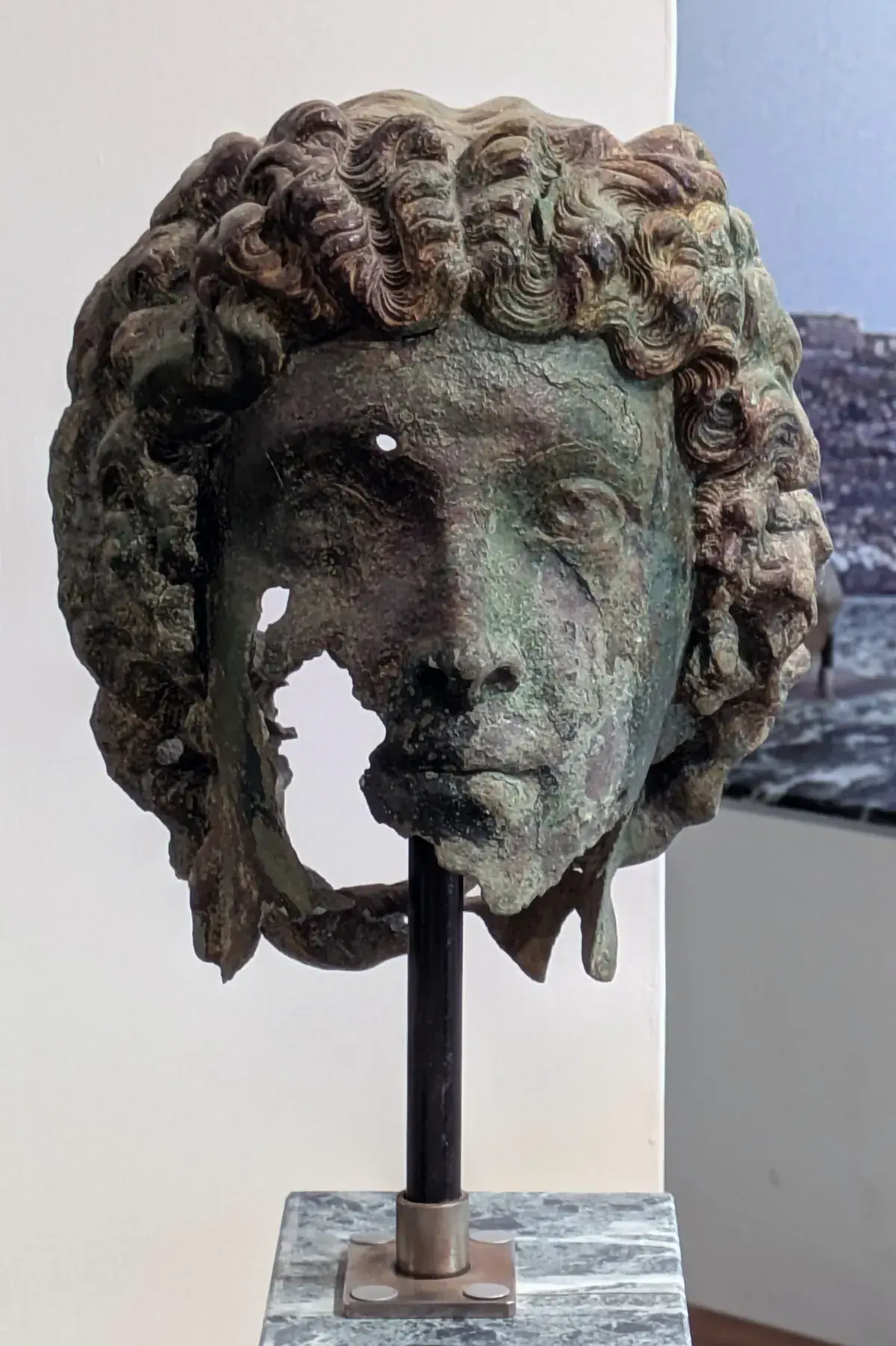
On the same square stands the Portico dei Cavalieri Templari, a Gothic arcade linked by tradition to the Knights Templar. Behind it is the Museo Archeologico Provinciale Francesco Ribezzo, the city's archaeology museum. Its best rooms hold finds from Brindisi's Greek and Roman past, including bronze statues and fragments recovered from the sea at Punta del Serrone, north of the city. If you have only one hour for a museum in Brindisi, spend it here.
Opening hours of the cathedral and the museum change with the season and with services. Mornings are the safest time; many churches in southern Italy close in the early afternoon and reopen in the late afternoon.
Romanesque Brindisi: San Giovanni al Sepolcro, San Benedetto and Santa Maria del Casale
Brindisi was a crusader port, and it shows in its churches. Three are worth your time.
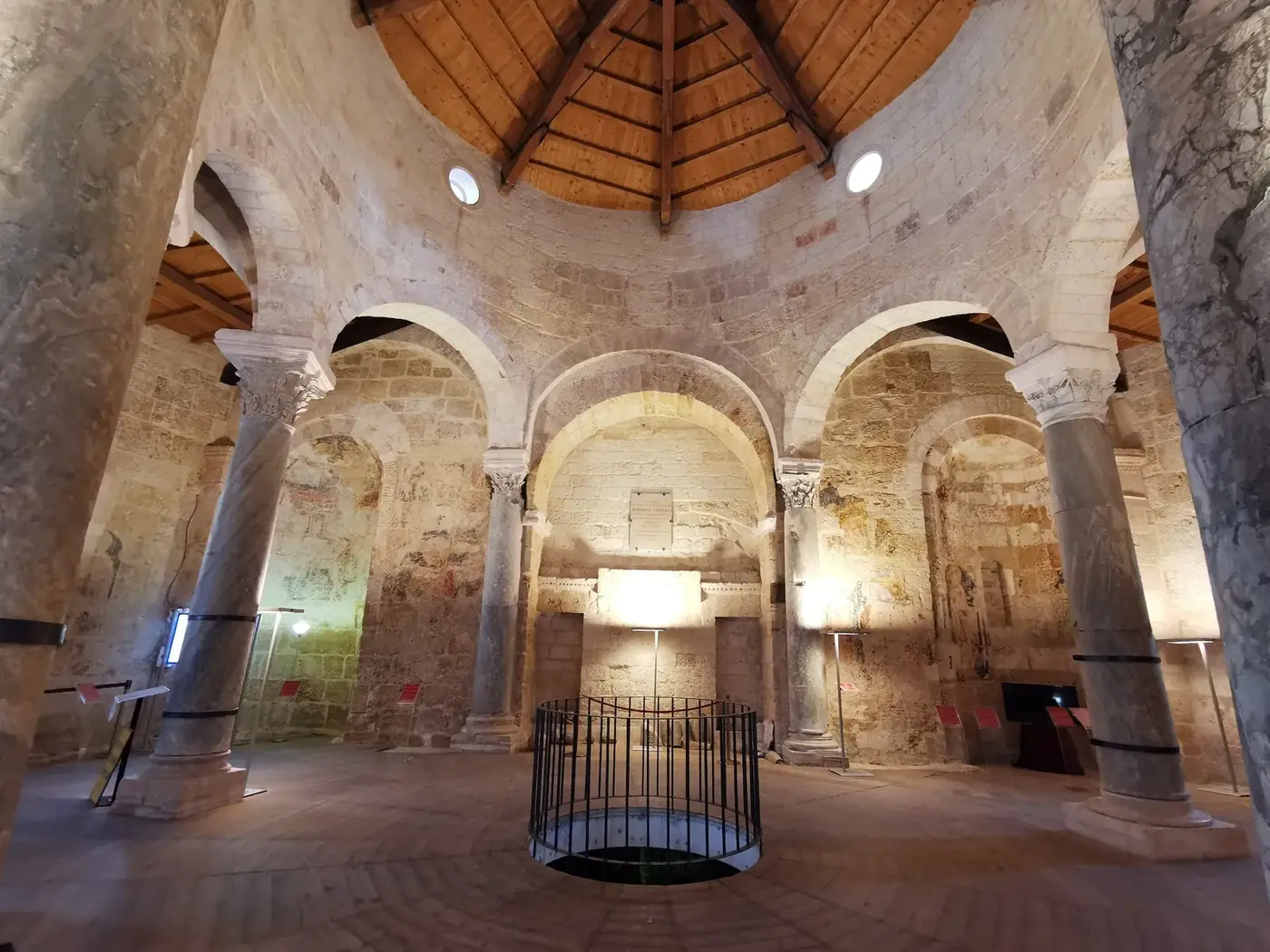
- San Giovanni al Sepolcro: a round church from the 11th century, built on the model of the Holy Sepulchre in Jerusalem. It is small, dark and very old, with fragments of frescoes and a carved portal. One of the most unusual buildings in Puglia.
- San Benedetto: a Romanesque church with a quiet cloister, a few minutes from the cathedral. Look at the carved animals on the side portal.
- Santa Maria del Casale: outside the old town, close to the airport. Its plain stone facade with patterns in two colours hides a large cycle of medieval frescoes inside, including a Last Judgement. If you have a hire car or a taxi on the way to a flight, this is the stop to make.
None of these needs more than half an hour. Together they tell you more about medieval Brindisi than any guidebook paragraph.
Castles and the Roman city under the theatre
Brindisi has two castles, and neither is a typical visit. The Castello Svevo, built by Emperor Frederick II in the 13th century, overlooks the western arm of the harbour and still belongs to the Italian Navy, so it opens only on special occasions. The Castello Alfonsino, also called Castello Rosso for the colour of its stone, sits on the island of Sant'Andrea at the mouth of the harbour and is best seen from the water or from the coast road.
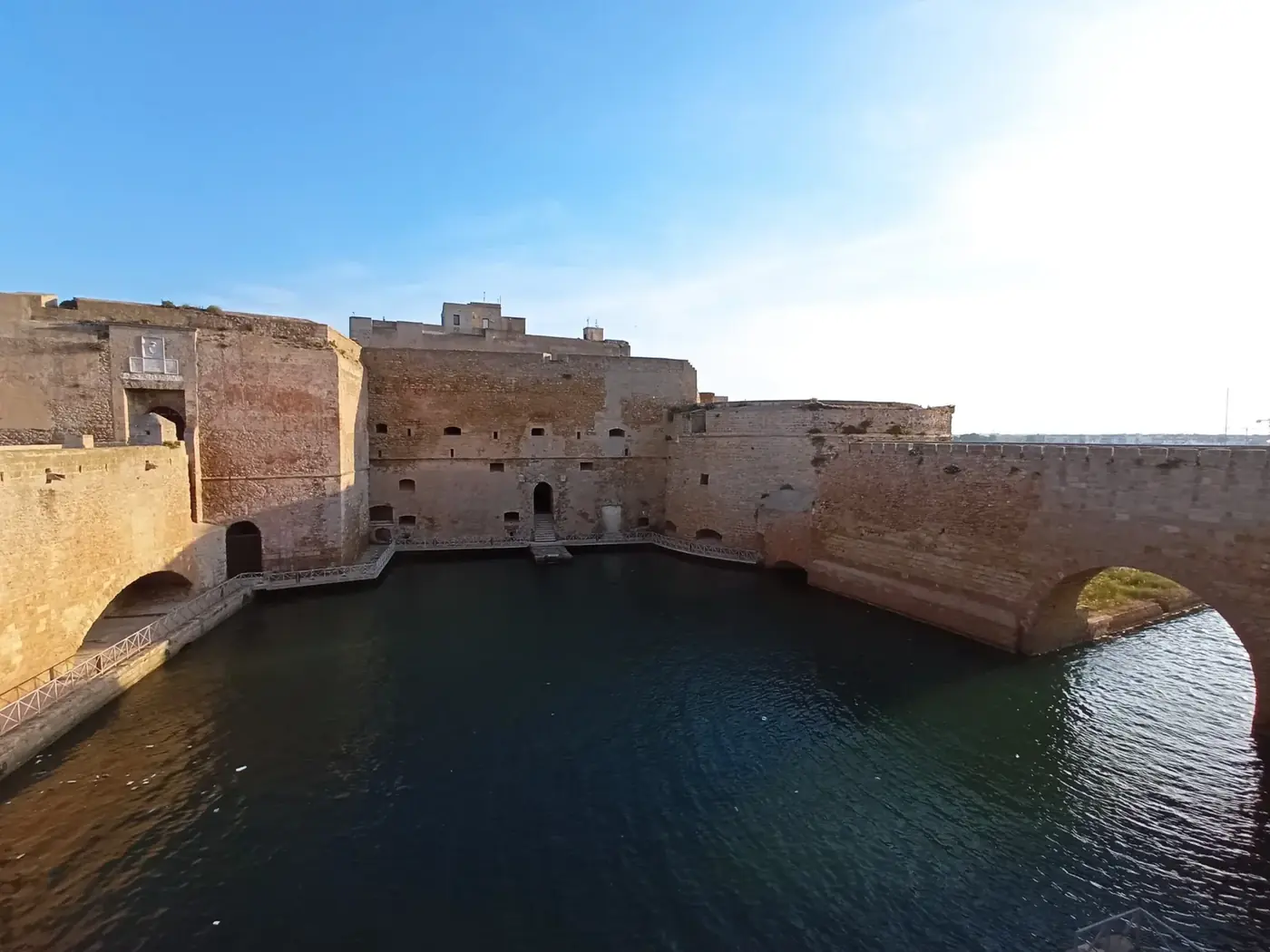
Back in the centre, look for the excavations of San Pietro degli Schiavoni under the Nuovo Teatro Verdi. The theatre was built on stilts above a piece of the Roman city, with streets and houses still visible through the glass and from the walkways. It is one of those details that tell you Brindisi is a city built on layers.
Finally, walk down Corso Garibaldi from Piazza Vittoria to the harbour. It is the main shopping street, and in the evening it is part of the passeggiata loop.
How much time do you need in Brindisi?
The honest answer is less than you think, which is exactly why Brindisi works so well as a base. Here is how the old town fits into different stays.
| Time you have | What to see | Best for |
|---|---|---|
| 3 to 4 hours | Roman column, waterfront, Piazza Duomo, harbour boat | A layover or a night before a flight |
| 1 full day | All of the above, plus the museum, San Giovanni al Sepolcro, San Benedetto, the theatre excavations | A first visit |
| 2 days | Old town, plus Santa Maria del Casale and a beach afternoon at Torre Guaceto | A slow, short break |
| 3 to 4 days | Brindisi plus day trips to Ostuni, Lecce or Alberobello | Using Brindisi as a base for Puglia |
If you are passing through between a flight and a ferry, our Brindisi stopover guide has a plan for 24 and 48 hours. For longer stays, the day trips from Brindisi guide covers Ostuni, Lecce, Alberobello, Polignano and Otranto, all within about an hour or a little more by car.
A simple one-day plan for Brindisi
- Morning: coffee near Piazza Vittoria, then Piazza Duomo, the Templars' portico and the Ribezzo museum while it is cool.
- Late morning: San Giovanni al Sepolcro and San Benedetto, then the column's capital at Palazzo Granafei-Nervegna.
- Lunch: seafood in the old town, or a frisa (a crunchy ring of bread topped with tomatoes and oil) eaten on a bench. Our guide to what to eat in Brindisi lists the dishes to look for.
- Afternoon: rest. In summer the streets are empty between 13:00 and 17:00 for a reason.
- Late afternoon: the Roman column and Virgil's steps, then the theatre excavations.
- Sunset: the boat to the Monumento al Marinaio and back.
- Evening: the passeggiata on the Lungomare, then dinner.
Practical tips for visiting Brindisi
- Getting around: the old town is flat and compact. You do not need a car to see it, only comfortable shoes for the stone paving.
- Heat: from June to September, walk early and late. Keep the middle of the day for lunch, a siesta or the beach.
- Churches: dress with shoulders covered and avoid visiting during Mass.
- Driving: parts of the historic centre are limited traffic zones (ZTL). Park outside them and walk.
- Arriving by air: the airport is about 10 minutes from the centre; see Brindisi Airport to the city centre for the bus and taxi options.
We wrote this guide from BDS House, a whole home in the old town on Vico D'Orimini, with two private terraces and a rooftop view over the roofs to the cathedral. Everything in this article is within walking distance of the front door. If you want to sleep in the middle of it, you can check dates and book directly.
Questions travellers ask
Is Brindisi worth visiting?
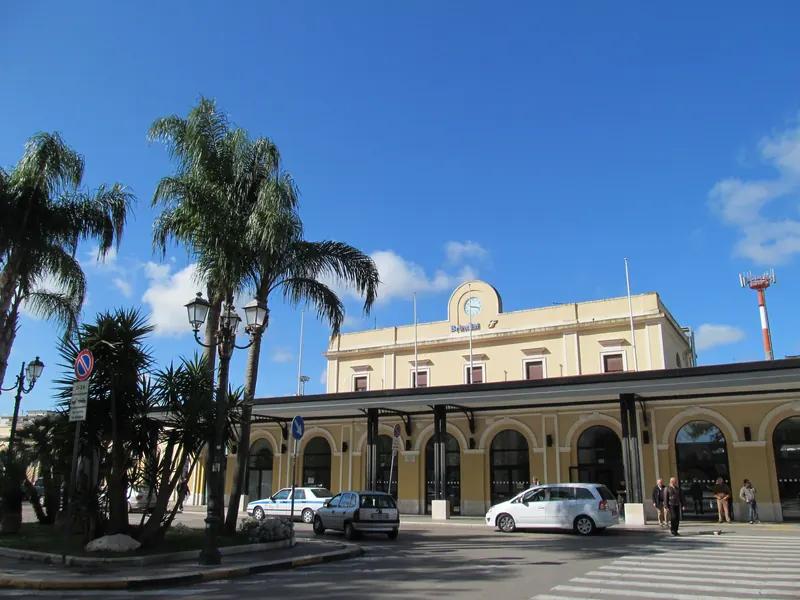
Yes, for a day or two. Brindisi has a walkable old town with the Roman column at the end of the Via Appia, a lively waterfront, Romanesque churches and an archaeology museum, with fewer crowds than Lecce or Polignano. Its airport and train station also make it the easiest base for Salento and the Valle d'Itria.
How many days do you need in Brindisi?
One full day covers the old town on foot. Two days let you add Santa Maria del Casale and a beach afternoon at Torre Guaceto. With three or four days you can use Brindisi as a base for day trips to Ostuni, Lecce and Alberobello.
What is Brindisi famous for?
Brindisi is famous as the end of the Via Appia, the Roman road from Rome, marked by a tall Roman column above the harbour. It is also known for its natural harbour, its ferries to Greece, the Monumento al Marinaio d'Italia and as the place where the poet Virgil died in 19 BC.
Where does the Via Appia end?
By tradition, the Via Appia ends at the Roman column above the harbour in Brindisi, at the top of the Scalinata Virgilio. A second column once stood beside it; most of it was moved to Lecce in the 17th century, where it supports the statue of Sant'Oronzo.
How do you get to the Monumento al Marinaio in Brindisi?
Take one of the small passenger boats that cross the inner harbour from the waterfront in the old town. The trip takes a few minutes and the boats run more often in summer. You can also drive around the harbour, but the boat is quicker and gives the best view of the city.
Is Brindisi walkable?
Yes. The historic centre is flat and compact, and most sights are within a 15-minute walk of each other: the Roman column, Piazza Duomo, the archaeology museum, the Romanesque churches and the waterfront. Only Santa Maria del Casale, near the airport, needs a short drive or taxi.
Is Brindisi safe for tourists?
Brindisi's old town and waterfront are generally calm and busy with families in the evening. Take the usual city precautions: keep an eye on bags in crowded places, use the well-lit main streets late at night, and do not leave valuables visible in a parked car.
What is there to do in Brindisi at night?
Walk the Lungomare Regina Margherita during the evening passeggiata, see the Roman column and the cathedral lit up, have an aperitivo by the harbour and eat late, as locals do. In summer the waterfront stays lively until well after midnight.
Sources and further reading
- Visit Puglia, official tourism site of the Puglia region
- Brindisi on Wikipedia
- Appian Way on Wikipedia
Times and prices are approximate and change by season. Last checked on 3 October 2026.