Day trips
The villages of the province of Brindisi: seven towns, one easy base
Quick answer
The best villages near Brindisi are Mesagne (15 to 20 minutes by car, heart-shaped old town), Oria (30 to 35 minutes, Frederick II's castle), San Vito dei Normanni and Carovigno (20 to 30 minutes, castles and rock churches), Francavilla Fontana and Ceglie Messapica (35 to 40 minutes, baroque streets and food) and Cisternino (45 to 50 minutes, Valle d'Itria). Each is a half-day trip.
| Closest town | Mesagne, about 15 km, 15 to 20 minutes by car |
|---|---|
| Furthest in this guide | Cisternino, about 55 km, 45 to 50 minutes |
| Reachable by train | Mesagne, Oria, Francavilla Fontana (Taranto line); San Vito and Carovigno (Bari line) |
| Best for food | Ceglie Messapica and Cisternino |
| Best for history | Oria and Mesagne |
| Time per town | 2 to 3 hours, or combine two in a half day |
| Best light | Late afternoon into the evening passeggiata |
Which towns near Brindisi are worth visiting?
At six in the evening in Mesagne, the shutters go up again after the long afternoon pause. Someone sweeps the step of a bakery, two old men take their chairs out into the lane, and the stone of the old walls turns the colour of honey. Nobody is there for you. That is the point.
The province of Brindisi is one of the least known parts of Puglia, and one of the easiest to explore. It runs from the Adriatic coast inland to the edge of the Valle d'Itria, and most of its towns are within 40 minutes of the city. Ostuni gets the crowds and has its own guide in our day trips from Brindisi. This page is about the others: seven towns where you see Apulian life as it is, with castles, baroque churches, Messapian walls and very good food, and no queue for a photo.
Here is what each one is for, how far it is, and how to combine them.
How far are the villages from Brindisi? A distance table
Times are by car from Brindisi old town, outside rush hour. Treat them as "about": tractors, roadworks and summer traffic all play a part.
| Town | Distance | By car | By train | Best for |
|---|---|---|---|---|
| Mesagne | About 15 km | 15 to 20 min | Yes, Taranto line | Old town, castle museum, evening walk |
| San Vito dei Normanni | About 22 km | 20 to 25 min | Station outside town | Castle, rock-cut crypts, quiet streets |
| Carovigno | About 28 km | 25 to 30 min | Station outside town | Castle, Easter flag festival, Torre Guaceto |
| Oria | About 35 km | 30 to 35 min | Yes, about 30 min | Frederick II's castle, medieval pageant |
| Francavilla Fontana | About 38 km | About 35 min | Yes, Taranto line | Baroque palazzi, Castello Imperiali |
| Ceglie Messapica | About 40 km | 35 to 40 min | Not practical from Brindisi | Food, almond biscuits, countryside |
| Cisternino | About 55 km | 45 to 50 min | Not practical from Brindisi | White lanes, butcher-grills, Valle d'Itria views |
A car makes everything easier, but Mesagne, Oria and Francavilla Fontana are realistic by regional train. Check times on Trenitalia the day before, and remember that some smaller stations sit a few kilometres from the centre.
Mesagne: the heart-shaped old town 15 minutes away
Mesagne is the town I send people to first, because it is close and it surprises. The old centre is enclosed by walls that draw the shape of a heart on the map, and inside it you find white stone palazzi, small baroque churches and lanes that open suddenly onto a square.
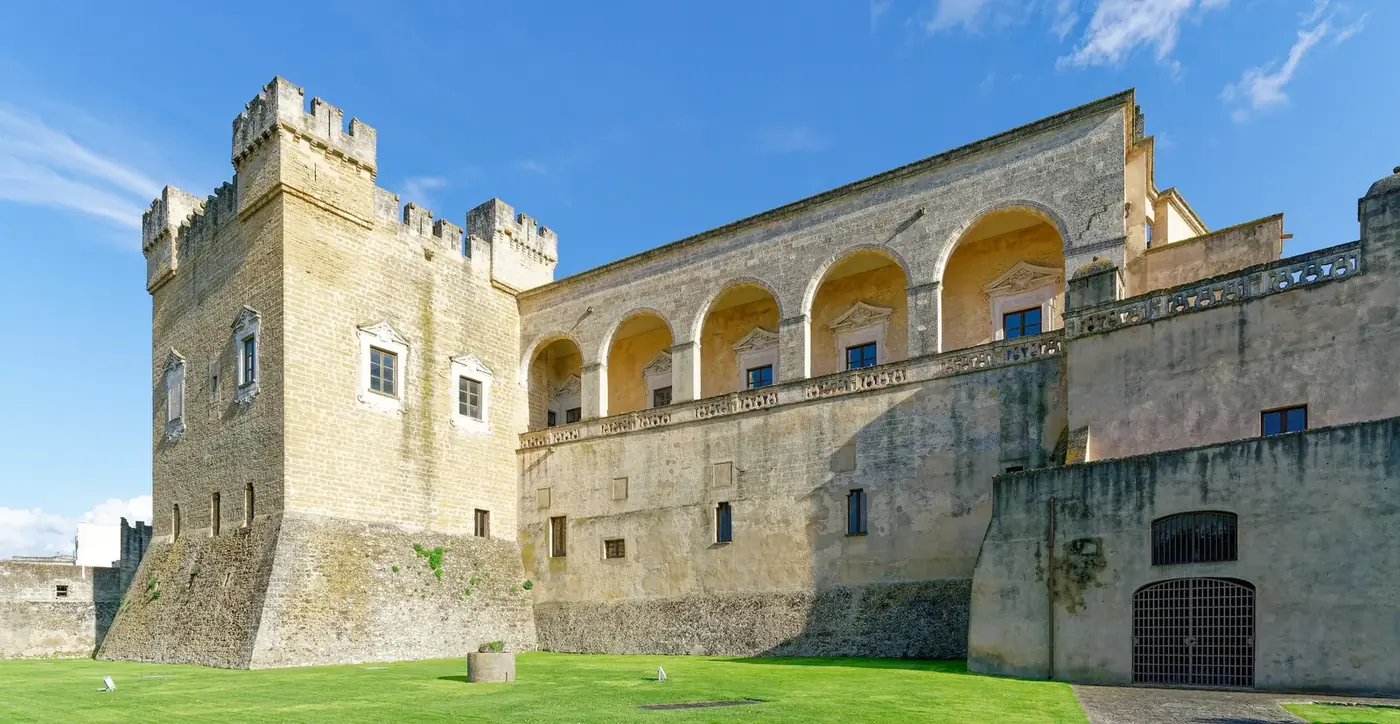
The castle grew from a Norman tower into a noble residence and now holds the Museo Archeologico Ugo Granafei, with finds from the Messapian, Greek and Roman periods. Walk out to the church of Sant'Anna and the Chiesa Matrice, then stay for the evening. In summer the squares fill with tables and the town feels like a small city.
Good for: a first taste of the province, an evening out, travellers without a car (it has a station on the Brindisi to Taranto line).
Oria: Frederick II's castle and a medieval summer
Oria sits on a hill above the plain, and you see its castle long before you arrive. The Castello Svevo is linked to Frederick II, the emperor who also built Brindisi's castle, and the town around it climbs to a large baroque cathedral with a tiled dome.
Oria also had one of the important Jewish communities of medieval southern Italy, and the old Jewish quarter is still part of the walk through the centre. Every summer the town stages the Corteo Storico di Federico II e Torneo dei Rioni, a costumed parade with hundreds of participants and a contest between the town's districts. It has usually been held in late July or the first half of August; check the year's programme before you go.
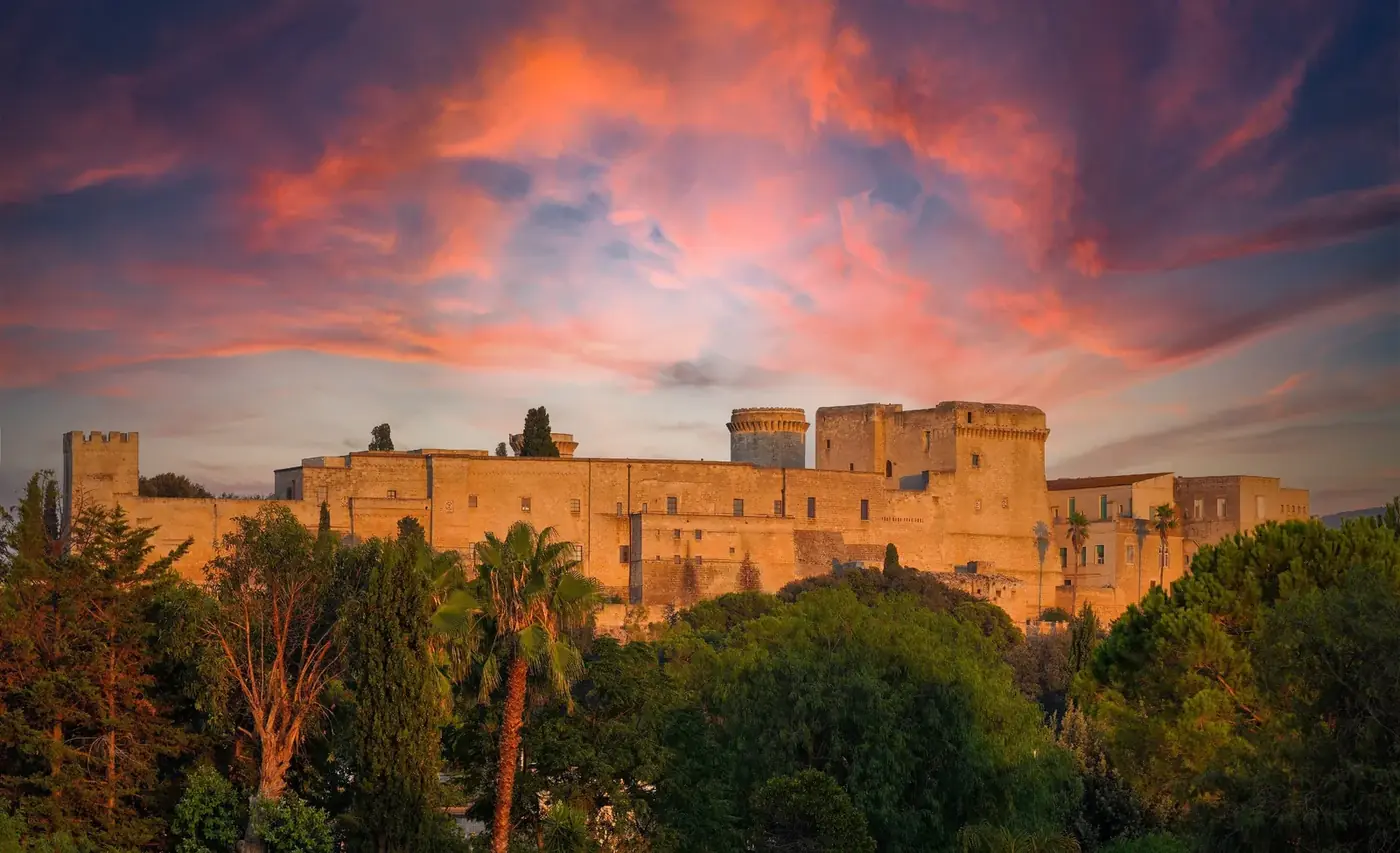
Good for: history lovers, families, a train day (about 30 minutes from Brindisi).
San Vito dei Normanni and Carovigno: castles, crypts and the sea nearby
These two towns sit next to each other, north-west of Brindisi, and pair well in one afternoon.
San Vito dei Normanni has a castle on the main square, built around a Norman tower, and narrow old lanes that locals call stratodde. Its best treasures are underground: rock-cut Byzantine crypts in the countryside, especially the Cripta di San Biagio, with frescoes dated to the late 12th century. Opening is often by arrangement, so ask locally before you drive out.
Carovigno is smaller and higher, with a castle and white lanes that feel close to Ostuni in spirit, without the crowds. Its big moment is the 'Nzegna, a festival in the week after Easter when local men throw and wave a large coloured banner in honour of the Madonna del Belvedere. It is also the town of the Torre Guaceto nature reserve, so you can combine a morning on the beach with a late lunch and an evening walk in town. Our beaches near Brindisi guide covers the reserve.
Francavilla Fontana and Ceglie Messapica: baroque streets and serious food
Francavilla Fontana is the third largest town of the province and the least touristy of all. Its centre is a grid of baroque palazzi with carved balconies, built when the Imperiali family ruled here. Their residence, the Castello Imperiali, faces the main square. Visit the Basilica del Santissimo Rosario, look up at the 18th-century clock tower, and enjoy a town where nobody is selling you anything.
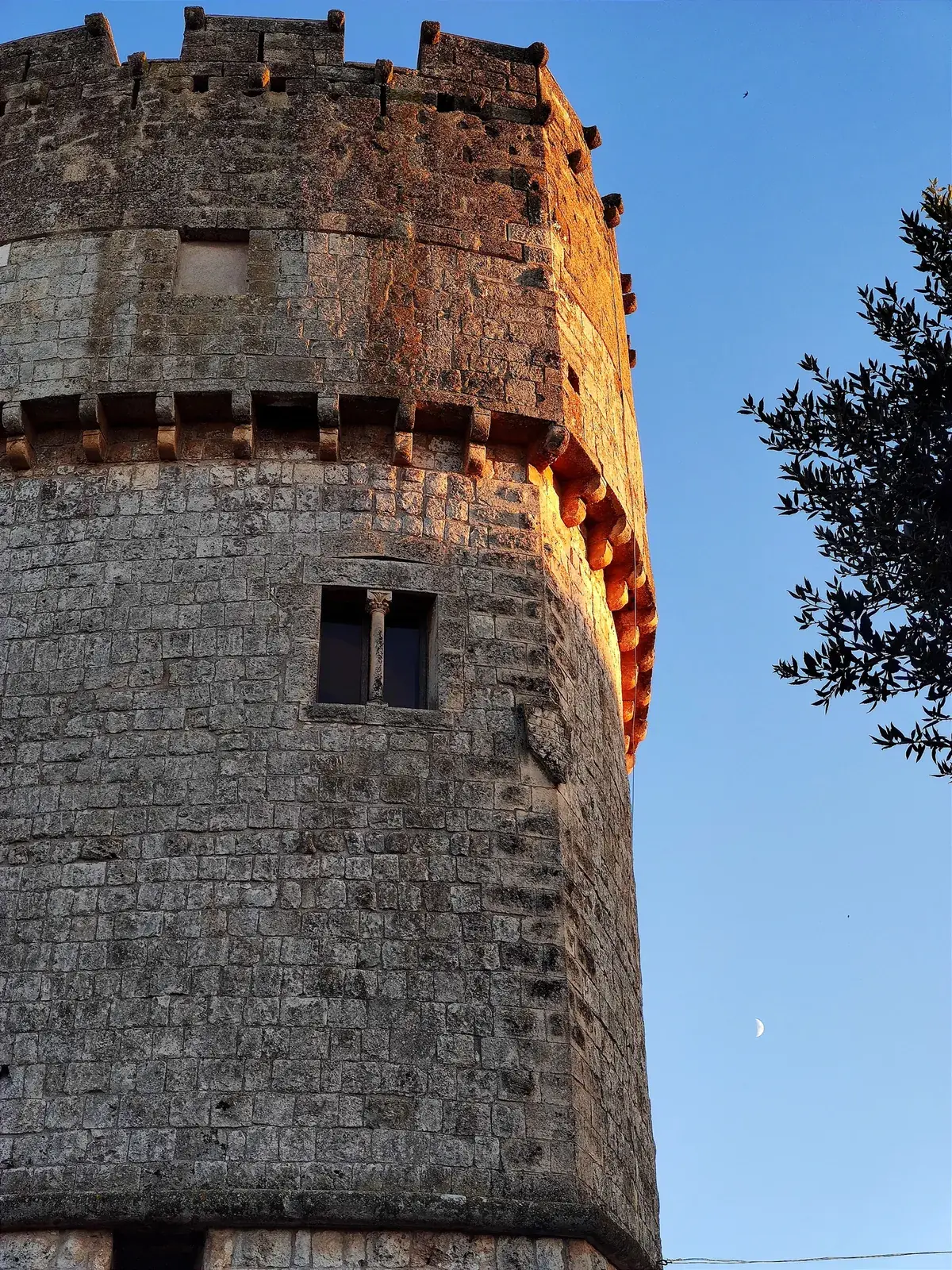
Ceglie Messapica is where people in the province go to eat. The town was an important Messapian centre, and its old core climbs to a ducal castle, but the reason most people come is the table. Look for the biscotto cegliese, a small almond biscuit filled with jam that is a Slow Food presidium, and for trattorie that cook the inland way: vegetables, wild greens, lamb, cheeses. Ceglie also holds a food festival in summer; check dates locally.
Both towns sit at the edge of the Valle d'Itria, so the drive itself, through olive groves and dry-stone walls, is part of the trip.
Cisternino: the Valle d'Itria without leaving the province
Cisternino is technically in the province of Brindisi, and it is one of the white towns of the Valle d'Itria. It is about 45 to 50 minutes away, so slightly over our 40-minute line, but too good to leave out.
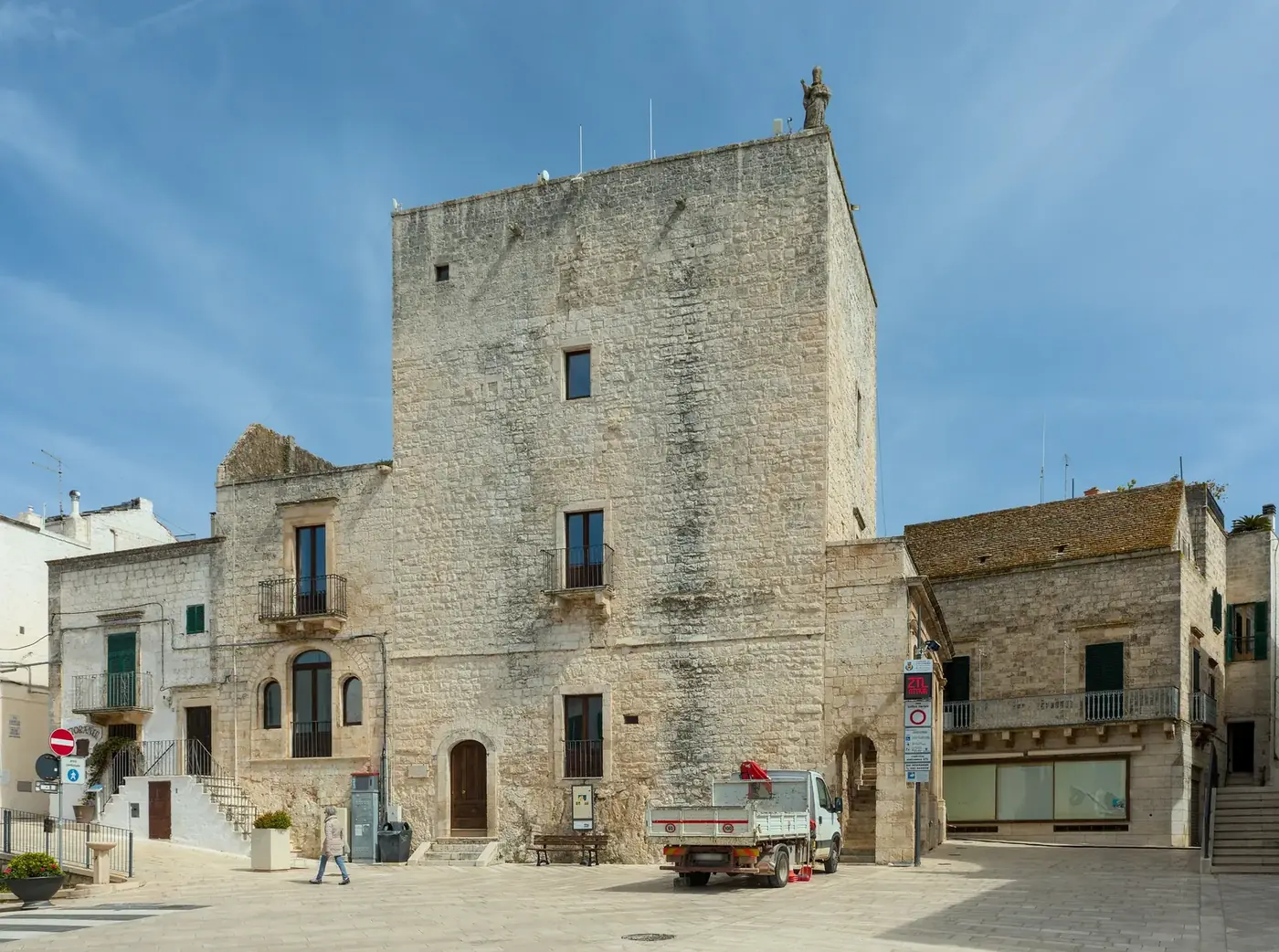
The old centre is a tangle of whitewashed lanes, outside staircases and flower pots. In the evening, follow the smoke: Cisternino is known for its butcher-grills, butcher shops with a wood or charcoal oven where you choose meat at the counter and they cook it for you to eat at simple tables outside. Look for bombette, small rolls of pork with cheese. It is an evening out more than a sightseeing visit.
Combine it with Ostuni (about 20 minutes away) or with Locorotondo for a full Valle d'Itria day. Our 7-day Puglia itinerary shows how.
How to combine the villages: three half-day loops
You do not need to see all seven. Choose by mood.
- History loop: Mesagne in the morning, lunch, Oria in the late afternoon, back to Brindisi for dinner. About 1 hour 15 of driving in total.
- Sea and castles loop: Torre Guaceto beach in the morning, Carovigno for lunch, San Vito dei Normanni at sunset.
- Food loop: Ceglie Messapica in the late afternoon for a walk and biscuits, Cisternino for a butcher-grill dinner. Choose a driver who does not drink, or book a taxi.
Practical tips: churches and museums often close between about 13:00 and 16:30, so plan mornings for visits and evenings for walking. Park outside the old centres, where many lanes are pedestrian or limited traffic zones; our driving and parking guide explains the signs. And carry some cash for small bakeries.
Why base yourself in Brindisi for the province?
Brindisi sits at the centre of its province, with fast roads fanning out in every direction: the SS7 west to Mesagne, Oria and Francavilla, the SS379 north to San Vito, Carovigno and Ostuni. Every town in this guide is a short drive away, and the airport is about 10 minutes from the old town, so you can land and be in Mesagne for the evening walk.
At BDS House you have a whole home in Brindisi's old town for up to six people, with two private terraces and a full kitchen, which is useful when you come back from Ceglie with a bag of biscuits and a bottle of local wine. For the bigger names, Lecce, Alberobello and Polignano, see Brindisi as a base for Puglia.
Questions travellers ask
What is the closest nice village to Brindisi?
Mesagne, about 15 km inland, 15 to 20 minutes by car or a short regional train ride. It has a heart-shaped walled old town, a castle with the Museo Archeologico Ugo Granafei and lively squares in the evening. It is the easiest first trip into the province.
Can I visit the villages near Brindisi without a car?
Some of them. Mesagne, Oria and Francavilla Fontana are on the Brindisi to Taranto railway line, and the stations are usable for a day trip. San Vito dei Normanni and Carovigno have stations outside the towns. Ceglie Messapica and Cisternino are much easier by car or taxi.
Is Cisternino in the province of Brindisi?
Yes. Cisternino belongs to the province of Brindisi, even though it is part of the Valle d'Itria with Locorotondo and Martina Franca. It is about 45 to 50 minutes from Brindisi by car and is known for its white lanes and its butcher shops that grill meat to order in the evening.
When is the medieval pageant in Oria?
The Corteo Storico di Federico II e Torneo dei Rioni takes place every summer, usually between late July and mid August. Dates have moved between editions, so check the official programme for the year before planning. Expect a costumed parade with hundreds of people and a contest between the town's districts.
What is the 'Nzegna in Carovigno?
A festival held in the week after Easter in honour of the Madonna del Belvedere. Local flag bearers throw and wave a large multicoloured banner, the 'Nzegna, in a precise sequence of moves. It ends with a procession to the sanctuary outside town. It is one of the most unusual traditions in the province.
What should I eat in Ceglie Messapica?
Try the biscotto cegliese, a small almond biscuit with a jam filling that is protected as a Slow Food presidium, and inland home cooking: vegetables, wild greens, lamb and local cheeses. Ceglie has a strong reputation for food in Puglia, and it is a good place for a long lunch.
How many villages can I see in a day from Brindisi?
Two is comfortable, three is the limit. Pair towns that are close to each other: Mesagne and Oria, San Vito dei Normanni and Carovigno, or Ceglie Messapica and Cisternino. Remember that churches and museums often close in the early afternoon, so mornings and evenings work best.
Are the villages better than Ostuni?
They are different. Ostuni is more spectacular and much busier in summer. Towns like Mesagne, Oria or Carovigno are quieter, cheaper and show everyday Apulian life. Ideally, see Ostuni once and give the rest of your time to the smaller towns.
Sources and further reading
- Province of Brindisi, Wikipedia
- Biscotto di Ceglie, Slow Food presidium
- Puglia official tourism site
- Trenitalia timetables
Times and prices are approximate and change by season. Last checked on 3 October 2026.